Ginevra de' Benci
by Leonardo da Vinci
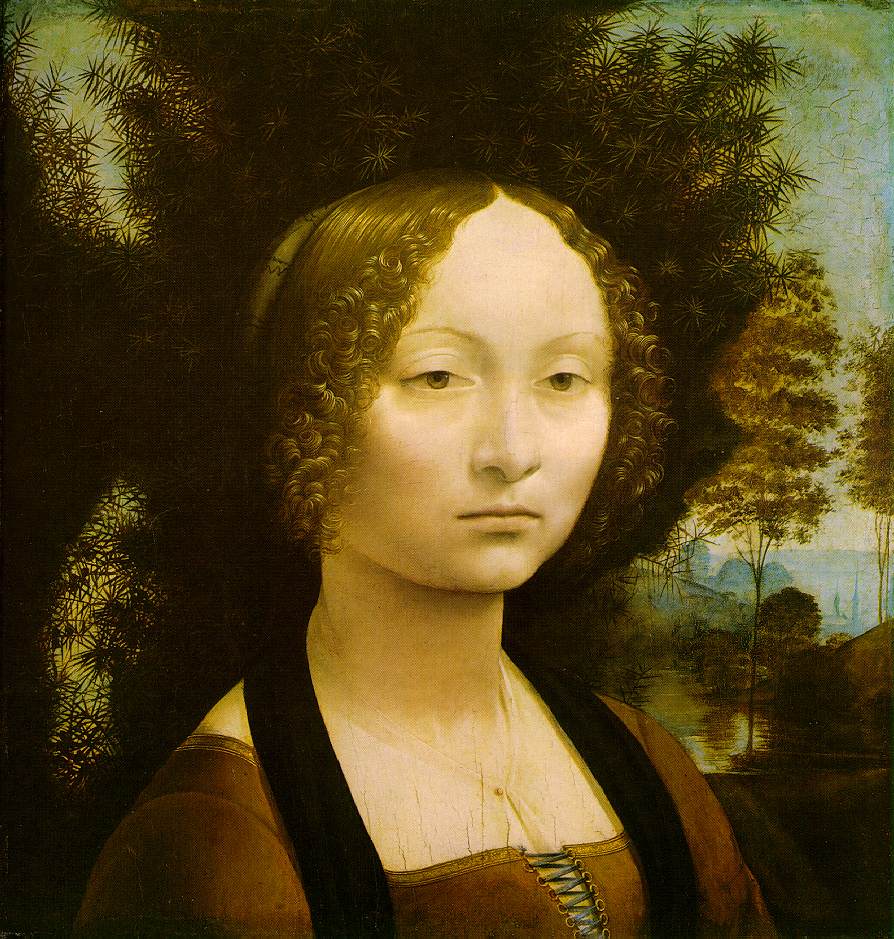
Ginevra de Benci - National Gallery of Art, Washington DC
The Reverse And Its Secrets
The reverse features a juniper sprig encircled by laurel and palm wreath, with the motto "VIRTVTEM FORMA DECORAT" ("Beauty adorns virtue"). Infrared examination in 1991 revealed Bernardo Bembo's original motto "Virtus et Honor" beneath — establishing the Venetian ambassador's connection. The painting was cut down by approximately one-third from the bottom (likely 16th–17th century fire or water damage), removing Ginevra's hands. A Windsor Castle silverpoint drawing of hands is believed to be the preparatory study for the missing section.
Subject And Significance
The sitter is Ginevra de' Benci (b. c. 1457), daughter of wealthy Florentine banker Amerigo de' Benci, known as a poet and intellectual. "Ginepro" (juniper) puns on her name. The painting may commemorate either her 1474 marriage to Luigi Niccolini or her platonic relationship with Bembo. Leonardo's innovations were revolutionary: outdoor setting (women were typically shown indoors), three-quarter pose (replacing the prevailing profile format), oil paint for naturalistic effects, and the first "psychological portrait" in art history. Leonardo's fingerprints and thumbprints, preserved in the paint, were discovered during the 1991 cleaning by David Bull.
Research & Analysis
The reverse features a juniper sprig encircled by laurel and palm wreath, with the motto "VIRTVTEM FORMA DECORAT" ("Beauty adorns virtue"). Infrared examination in 1991 revealed Bernardo Bembo's original motto "Virtus et Honor" beneath — establishing the Venetian ambassador's connection. The painting was cut down by approximately one-third from the bottom (likely 16th–17th century fire or water damage), removing Ginevra's hands. A Windsor Castle silverpoint drawing of hands is believed to be the preparatory study for the missing section.
The sitter is Ginevra de' Benci (b. c. 1457), daughter of wealthy Florentine banker Amerigo de' Benci, known as a poet and intellectual. "Ginepro" (juniper) puns on her name. The painting may commemorate either her 1474 marriage to Luigi Niccolini or her platonic relationship with Bembo. Leonardo's innovations were revolutionary: outdoor setting (women were typically shown indoors), three-quarter pose (replacing the prevailing profile format), oil paint for naturalistic effects, and the first "psychological portrait" in art history. Leonardo's fingerprints and thumbprints, preserved in the paint, were discovered during the 1991 cleaning by David Bull.